
Can Minidumperfactory Electric Mini Dumper Factory Support Faster Jobsite Workflows
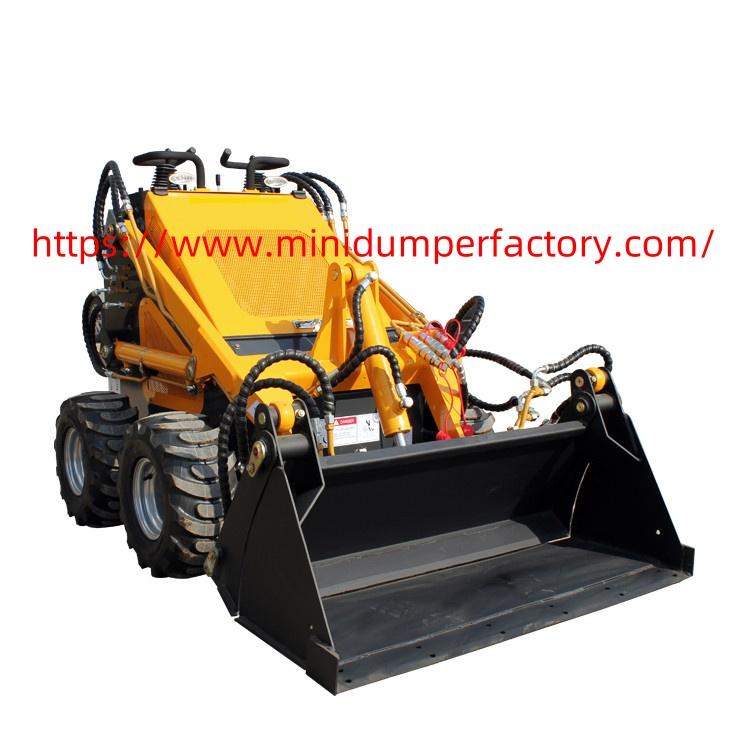
Electric Mini Dumper Factory operations play a central role in how construction teams manage material movement, labor coordination, and project scheduling across expanding worksites. As building projects become more complex and time sensitive, contractors increasingly focus on improving equipment efficiency to maintain stable progress without unnecessary disruption.
One effective approach begins with clear jobsite planning. Before machines arrive, teams benefit from mapping transport routes, defining loading zones, and scheduling material delivery windows. This preparation reduces confusion, shortens travel distances, and allows operators to perform tasks in a predictable sequence. When transport routes remain consistent, overall workflow becomes easier to control and daily targets become more achievable.
Operator training is another key factor influencing efficiency. Well trained crews understand load distribution, terrain handling, and maintenance routines. This knowledge helps prevent delays caused by misuse or mechanical stress. Simple daily inspections, including battery condition checks and tire evaluation, reduce unexpected stoppages and extend equipment service life. Over time, these routines contribute to smoother production cycles and improved equipment reliability.
Maintenance scheduling also supports consistent jobsite performance. Instead of reacting to breakdowns, construction teams benefit from structured maintenance intervals. This includes battery management, component inspection, and software calibration. When machines remain in stable operating condition, project managers can schedule transport tasks with greater confidence and avoid interruptions during critical construction phases.
Worksite layout design further affects how efficiently hauling equipment performs. Narrow access points, uneven ground, and crowded staging areas slow movement and increase risk. By adjusting site organization, clearing transport corridors, and coordinating material storage zones, crews allow equipment to operate with fewer obstacles. This not only improves transport speed but also enhances overall site safety.
Another valuable strategy involves coordinating multiple machines through task scheduling. When operators know exactly when to load, transport, and unload materials, idle time decreases and overlapping tasks become easier to manage. Supervisors who align hauling operations with excavation, formwork, and concrete placement achieve better flow between teams and minimize waiting periods.
As projects expand, communication systems become increasingly important. Clear signaling between machine operators, ground crews, and supervisors prevents misalignment and keeps work progressing smoothly. Regular briefings help ensure everyone understands daily priorities and any adjustments to scheduling or site conditions.
Energy management also influences efficiency in modern construction environments. Monitoring power usage, charging cycles, and battery health allows teams to plan shifts more effectively. By organizing charging schedules around work breaks and low activity periods, equipment remains available during peak production times. This approach supports steady output while managing long term operational costs.
For contractors managing multiple job sites, data collection from equipment performance becomes a valuable planning tool. Tracking usage hours, load cycles, and maintenance intervals helps project managers forecast resource needs and optimize fleet deployment. These insights support better decision making and long term operational planning.
Minidumperfactory continues to support construction professionals seeking equipment solutions that fit evolving project requirements. By aligning machine capabilities with jobsite planning, workforce coordination, and maintenance strategies, contractors gain greater control over daily operations. Over time, this structured approach strengthens productivity and supports sustainable project growth.
In modern construction, efficiency is not driven by equipment alone. It emerges from the relationship between machinery, planning, training, and communication. Companies that invest in these combined elements are better positioned to manage demanding schedules and deliver consistent project outcomes.
Construction professionals interested in evaluating suitable equipment configurations and transport solutions can review available models and application examples at https://www.minidumperfactory.com/product/
 English
 Arabic
 French
 Spanish
 Portuguese
 Deutsch
 Turkish
 Dutch
Dutch
 Italiano
 Russian
 Romaian
 Portuguese (Brazil)
 Greek
Greek