
Can Double Block and Bleed Ball Valves OEM/ODM Reduce Operational Risks?
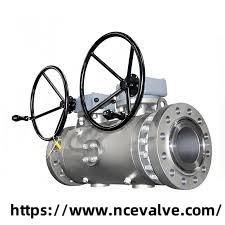
Double Block and Bleed Ball Valves OEM/ODM provides tailored solutions for systems requiring secure isolation and pressure verification during maintenance or testing. These configurations allow operators to close off sections completely while offering a safe point to release or check trapped fluids, reducing risks in complex piping networks. Custom manufacturing adapts designs to fit specific project layouts, ensuring alignment with operational demands across various industries.
Bodies often feature compact arrangements that combine two seating surfaces with an intermediate vent or drain pathway. This setup enables verification of seal effectiveness without disrupting downstream processes. Materials chosen withstand pressures and media characteristics, maintaining structural integrity through repeated cycles. Configurations include trunnion-mounted balls for stability in larger sizes or floating options for lighter duties, each providing reliable quarter-turn operation.
Connection styles range from flanged ends to threaded or welded variants, facilitating integration into existing lines. Stem extensions offer flexibility when insulation or accessibility becomes necessary. Actuation choices span manual levers to pneumatic or electric operators, allowing remote or automated control according to site preferences. Cavity relief mechanisms address thermal expansion concerns, directing excess safely away from critical areas.
Applications appear in scenarios where positive isolation proves essential, such as tank farms, transfer stations, or processing units handling hydrocarbons, chemicals, or gases. The ability to confirm zero leakage before entry enhances worker safety during interventions. Flow paths remain unobstructed when open, supporting efficient throughput. Tight shutoff properties contribute to containment goals, minimizing unintended emissions.
Maintenance routines focus on periodic inspection of seats, stems, and vent ports to sustain performance. Gentle cleaning preserves internal surfaces, while lubrication applied judiciously keeps mechanisms smooth. Compatibility evaluations prevent mismatches with adjoining fittings or fluids. Practitioner forums circulate observations on service life and adjustment techniques, fostering shared knowledge.
Refinements draw from field experiences, incorporating subtle enhancements to torque requirements or seal resilience. Production approaches consider resource efficiency, favoring methods that limit scrap. Supplier relationships secure consistent access to quality components, bolstering final assembly reliability. Visual assessments during assembly catch potential variances early.
Peace of mind emerges when equipment performs predictably in critical moments, allowing teams to concentrate on primary responsibilities. Industrial traditions value robust isolation methods that endure operational stresses. Progress in valve technology traces gradual improvements toward greater dependability in isolation tasks.
Planning installations involves reviewing line conditions and media properties beforehand. Coverage details provide reassurance throughout manufacturing stages. Tactile feedback during handle movement confirms proper engagement. Collaborative suggestions from users shape incremental developments.
Shifting requirements prompt responsive adaptations in offerings. Informative guides outline alignment and testing steps clearly. Trial fittings validate concepts under expected stresses. Input channels weave practical insights into future iterations.
Suitability extends from steady-state operations to occasional shutdowns. Complementary insulation layers aid thermal management. Ideas originate from diverse site observations. Professional networks deliver timely counsel when issues surface.
Equilibrium between isolation certainty and operational ease guides every aspect. Small modifications frequently yield meaningful gains in handling confidence. Accessory items like position indicators broaden utility organically. Procurement strategies align selections with overall scopes.
Philosophies emphasize measured functionality, achieving effective outcomes without unnecessary complexity. Insights into sealing dynamics inform thoughtful material pairings. Fundamentals of flow control promote consistent behavior. Assistance structures support choices from inquiry through implementation.
Creative combinations address particular constraints, producing fitting results. Steady sourcing upholds material uniformity. Awareness of pattern changes enables proactive adjustments. Explanatory materials clarify technical points accessibly.
Selecting appropriate isolation devices strengthens capabilities in fluid management, merging security with practical control. Naishi applies dedicated effort to crafting these solutions with attention to detail. To view available custom options, visit https://www.ncevalve.com/product/ for further exploration.
 English
 Arabic
 French
 Spanish
 Portuguese
 Deutsch
 Turkish
 Dutch
Dutch
 Italiano
 Russian
 Romaian
 Portuguese (Brazil)
 Greek
Greek